
We all experience days when stress seems to take over our lives. Deadlines at work keep piling up, family responsibilities continue to grow, and financial pressures often feel overwhelming. Balancing it all can be exhausting. Today, stress has become a part of everyday life—not just in India, but across the world—affecting our mental, emotional, and physical well-being.
But here’s the thing – because stress is normal doesn’t mean you have to accept it as your life sentence. Facts from the World Health Organization show that anxiety disorders alone affect more than 301 million people around the globe, making it a critical health issue that we cannot simply stand by.
Yoga has been practiced in India for thousands of years not just as an exercise but as a complete system for calming the mind and healing the body. And today, science is finally proving what our ancestors always knew.
In this blog, you will discover what stress and anxiety actually do to your body and how five simple yoga poses can help you feel calmer, lighter and more at peace every single day.
What Are Stress and Anxiety? How They Affect the Mind and Body
Before we talk about solutions, let us first understand the problem clearly.
What is Stress?
Stress is your body’s natural response to pressure or any situation that feels threatening or overwhelming. It can be triggered by work, relationships, money, health or even small daily challenges that keep piling up over time.
What is Anxiety?
Anxiety goes one step further. It is a constant feeling of worry, fear or unease even when there is no immediate danger present. According to the National Institute of Mental Health (NIMH), anxiety disorders are the most common mental health condition in the United States, influencing an estimated 19.1% of adults every single year.
Also Read: What Is Kriya Yoga? The Complete Beginner’s Guide
How Do They Affect Your Mind and Body?
Most people think stress only affects the mind. But the truth is it attacks your entire body silently. Here are the 5 most important ways stress and anxiety impact you
- Disturbed Sleep Stress keeps your mind active at night making it almost impossible to fall into deep, restful sleep regularly.
- Weakened Immunity Chronic stress lowers your body’s ability to fight infections making you fall sick more frequently than usual.
- Heart Problems Long term anxiety increases blood pressure and heart rate which puts serious strain on your cardiovascular system over time.
- Digestive Issues Stress directly affects your gut health causing problems like bloating, acidity, irritable bowel and loss of appetite regularly.
- Mental Exhaustion Constant anxiety drains your mental energy completely making it hard to focus, make decisions or feel motivated about anything.
How Yoga Can Help Reduce Anxiety and Bring Mental Peace
Most of us do not even realise how much stress we carry in our bodies every single day. Stiff shoulders, fast shallow breathing, a mind that just will not stop sound familiar? These are simple signs that your body is tired and needs a break. That is exactly where yoga helps. Yoga is not complicated or only for flexible people. It is a simple and gentle practice that anyone can start. It slowly teaches you to breathe better, move mindfully and feel calm again.
When you practice yoga regularly, your body shifts from stress mode into calm mode naturally. Your breathing becomes deeper, your heart rate slows down and your mind stops racing. Even 20 minutes of simple yoga daily can change how you feel from the inside out giving you a sense of peace that no amount of scrolling or overthinking ever will.
Also Read: Difference Between 200 Hour, 300 Hour, and 500 Hour Yoga Teacher Training Course
What Science Actually Says About Yoga and Stress Relief
Yoga used to be viewed as purely a spiritual practice. Now science is playing catch-up to what Indian Yogis have known for centuries. In recent years, clinical studies conducted by researchers at AIIMS New Delhi & Harvard Medical School have been published, verifying that yoga actively decreases stress and increases wellbeing in individuals who practice yoga. One study showed that participants practicing yogic breathing had a significant decrease in stress scores- and this benefit increased with continued practice.
The science behind yoga is stronger than most people realize. Top institutions like AIIMS New Delhi and Harvard Medical School have both officially recognized yoga as a powerful tool for stress management. and the research is highly encouraging a systematic review found that the vast majority of studies tracking cortisol, which is your body’s main stress hormone, recorded a significant drop in individuals who practiced yoga regularly compared to those who did not. So yoga is not just making you feel good emotionally. It is actually changing your body from the inside at a deep hormonal level.
Top 5 Yoga Poses That Help Calm Anxiety Naturally
Now that you understand why yoga works let us get practical. These five poses are specifically chosen because they are gentle, beginner friendly and deeply effective for calming an anxious mind. You do not need any experience to try them today.
1. Child Pose (Shishuasana)
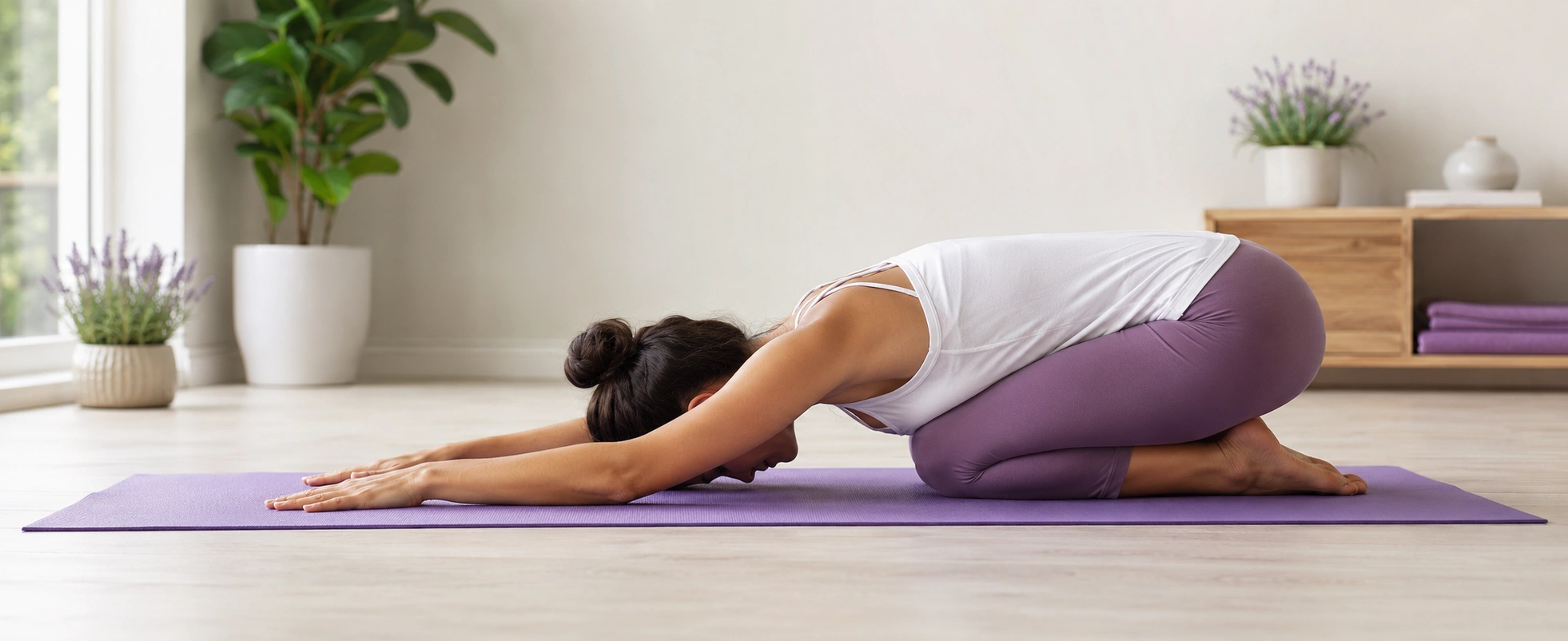
Child Pose is one of the most naturally comforting positions your body can be in. The moment you fold forward and rest your forehead on the ground something inside you just lets go. It is the yoga world’s most beloved resting pose for a reason.
How to Do It
- Kneel on your yoga mat and sit back on your heels comfortably
- Slowly fold your upper body forward stretching your arms out in front
- Rest your forehead gently on the mat and close your eyes
- Breathe deeply and slowly hold this position for 1 to 3 minutes
- Feel your back expand with each breath and your shoulders soften completely
Safety Tips
- Avoid this pose if you have a knee injury or severe knee pain
- Do not force your hips down if they do not naturally reach your heels
- During pregnancy should keep knees wide apart while doing this pose
- If forehead does not reach mat comfortably place a folded blanket underneath
2. Cat and Cow Stretch (Marjariasana)
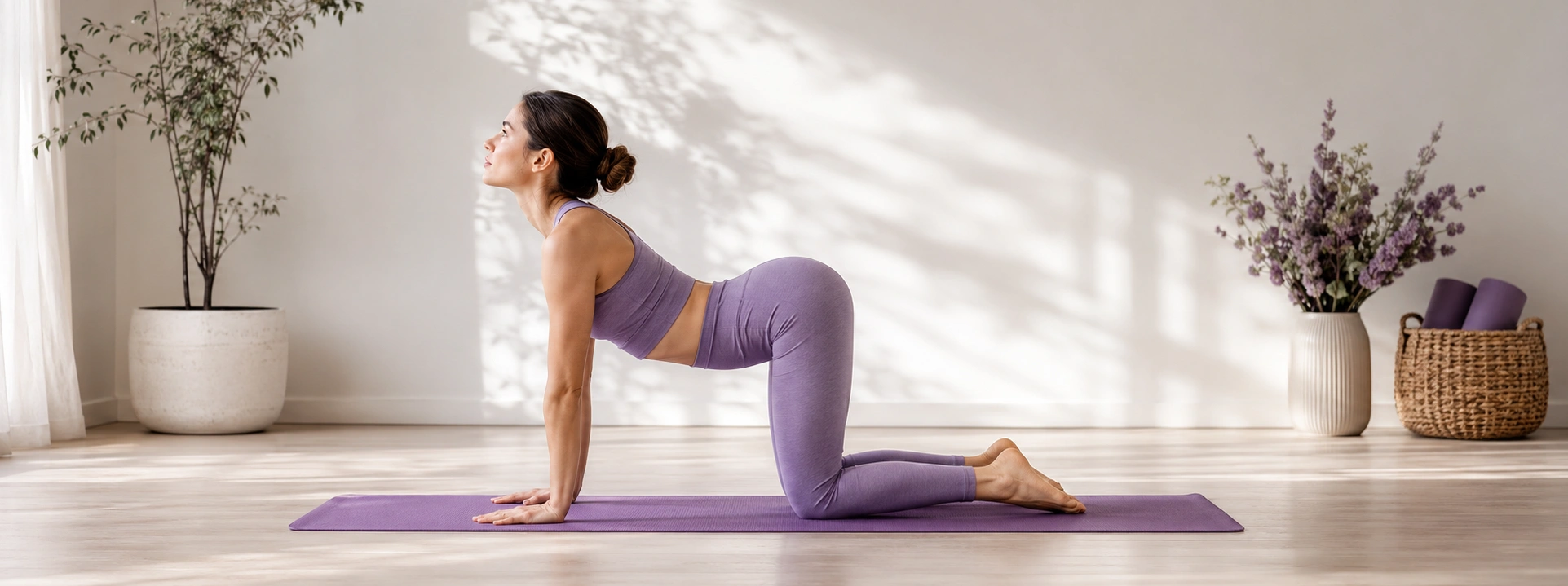
Cat and Cow is a gentle flowing movement between two positions that works like magic for a stressed and tense body. The rhythmic movement combined with deep breathing makes this one of the most calming poses for both the spine and the nervous system.
How to Do It
- Come onto your hands and knees in a tabletop position on your mat
- For Cow inhale deeply, drop your belly down and lift your head and tailbone up
- For Cat exhale slowly, round your spine upward and drop your head down gently
- Flow smoothly between these two movements following your breath naturally
- Repeat this gentle flow for 8 to 10 rounds feeling each vertebra move slowly
Safety Tips
- Move slowly and gently this is not a power pose but a calming flow
- Avoid if you have a serious wrist injury or carpal tunnel syndrome
- Keep your wrists directly under your shoulders to avoid unnecessary strain
- Never force the movement let your breath guide the pace naturally
3. Two-Legged Forward Bend (Paschimottanasana)
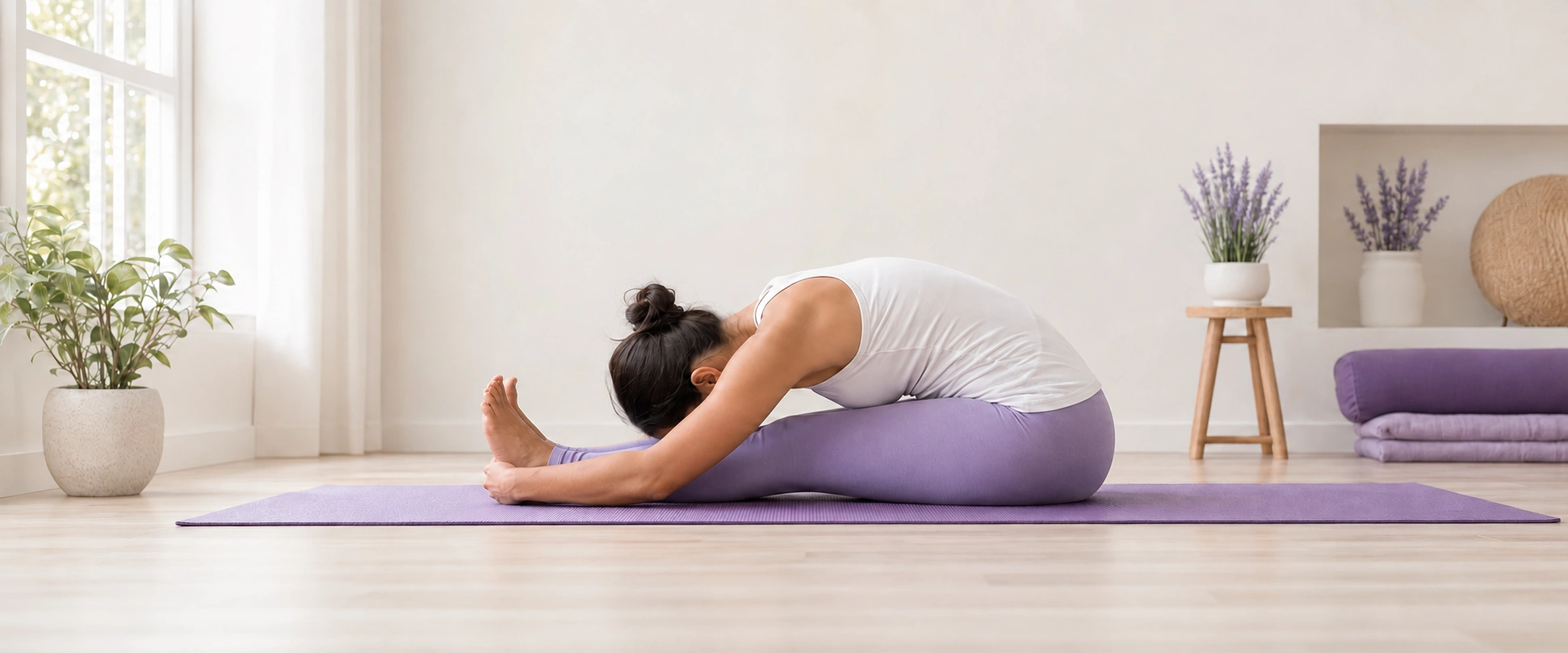
This seated forward bend is deceptively simple but incredibly powerful for calming the nervous system. When you fold forward your brain receives a signal that you are safe which directly reduces the fight or flight response that drives most anxiety.
How to Do It
- Sit on your mat with both legs stretched straight out in front of you
- Inhale deeply and lengthen your spine sitting up as tall as possible
- Exhale slowly and fold forward reaching your hands toward your feet gently
- Do not force the stretch go only as far as feels comfortable for your body
- Hold the position for 1 to 2 minutes breathing slowly and deeply throughout
Safety Tips
- Never round your back aggressively focus on length not depth of the stretch
- Bend your knees slightly if your hamstrings feel very tight or uncomfortable
- Avoid this pose if you have a herniated disc or serious lower back injury
- Use a yoga strap around your feet if you cannot reach them comfortably yet
4. Legs-Up-The-Wall Pose (Viparita Karani)
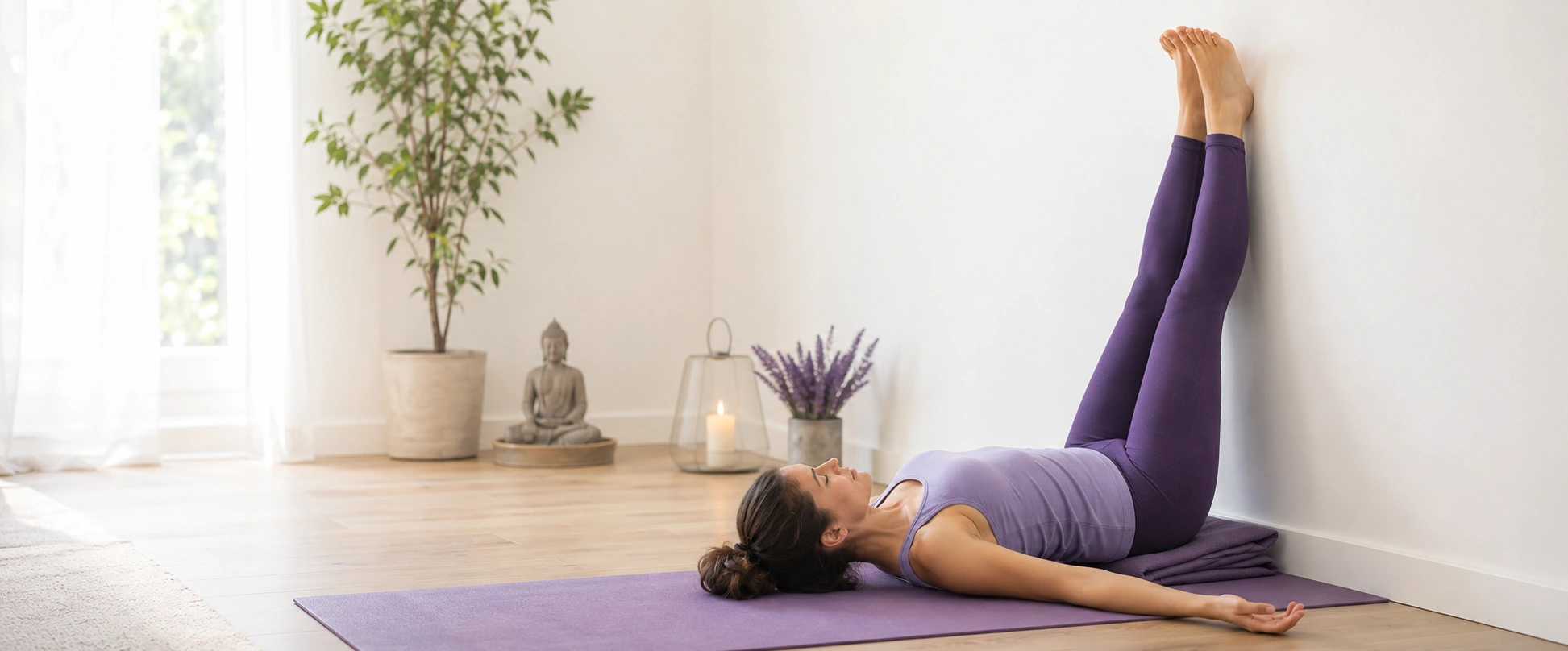
This is possibly the most relaxing yoga pose in existence. Lying on your back with your legs resting up against a wall completely reverses blood flow and signals your entire nervous system to shift into deep rest mode almost immediately.
How to Do It
- Sit sideways next to a wall and then swing your legs up as you lie back
- Your legs should rest comfortably straight against the wall above you
- Rest your arms by your sides with palms facing upward naturally
- Close your eyes and breathe slowly stay here for 5 to 10 minutes
- To come out gently bend your knees and roll slowly to one side first
Safety Tips
- Place a folded blanket under your lower back for extra comfort and support
- Avoid this pose during menstruation as it is an inverted position
- Do not practice if you have glaucoma or serious eye pressure problems
- Come out of the pose very slowly do not stand up suddenly after this
5. Corpse Pose (Shavasana)
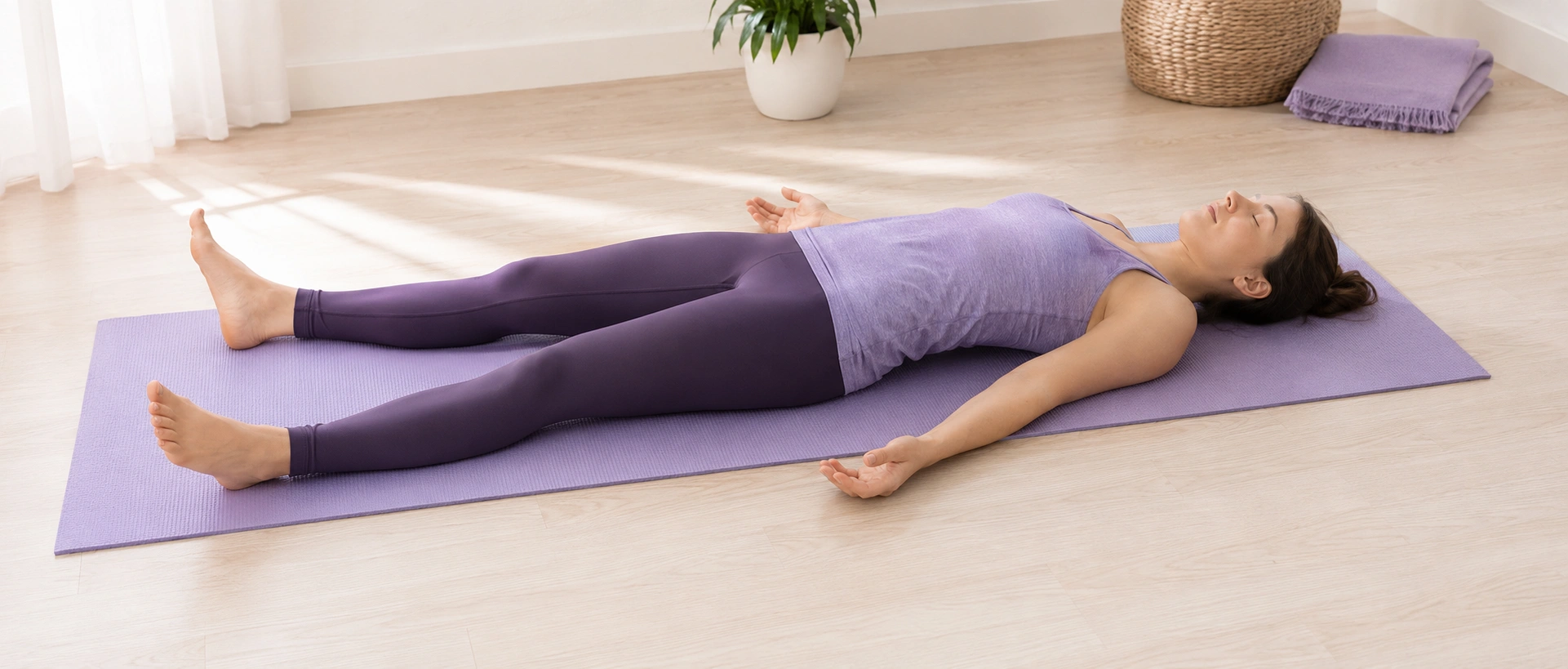
Do not let the simplicity of this pose fool you. Shavasana lying completely still is considered the most important pose in all of yoga. It is the pose where your body absorbs everything you have practiced and your nervous system finally gets permission to completely reset itself.
How to Do It
- Lie flat on your back with your legs slightly apart and arms by your sides
- Turn your palms to face upward and let your feet fall naturally outward
- Close your eyes and consciously relax every single part of your body slowly
- Start from your toes and work upward feet, legs, belly, chest, face, mind
- Stay completely still for at least 5 to 10 minutes breathing naturally throughout
Safety Tips
- If your lower back feels uncomfortable place a bolster under your knees
- Cover yourself with a light blanket as body temperature drops during this pose
- Resist the urge to check your phone this stillness is the actual healing
- Try not to fall fully asleep the goal is conscious relaxation not sleeping
Conclusion
Stress and anxiety are real. They are heavy. And they affect millions of people every single day across India and the world. But they do not have to be permanent.
What makes yoga so beautiful is that it does not require expensive equipment, a gym membership or hours of your day. Just a mat, a quiet corner and five simple poses can begin to change how your mind and body feel from the very first session.
These five poses Child Pose, Cat and Cow, Forward Bend, Legs Up the Wall and Shavasana are not just exercises. They are ancient tools for healing that science now confirms actually work.
Start with just 20 minutes today. Your mind deserves that peace. Your body is ready for that rest. And if you want to go deeper into your yoga journey And if you want to go deeper into your journey Tratak Yoga in Rishikesh offers certified yoga teacher training programs designed to transform not just your body but your entire relationship with life.
Frequently Asked Questions
1. How quickly does yoga reduce anxiety and stress symptoms?
If you stick to yoga regularly, most people start noticing a real change in their stress and anxiety within 2 to 4 weeks. A study from the Journal of Clinical Psychology also confirmed that just 12 weeks of regular practice can bring significant reduction in anxiety levels. Now everyone is different and your results may come sooner or take a little longer. But the best part is — you do not have to wait weeks to feel something. Even your very first session can make you feel lighter, calmer and more in control that same day.
2. How many times a week should I practice yoga for anxiety relief?
You do not need to spend hours doing yoga every single day. Research shows that practicing just 3 to 5 times a week is enough to see real results in your anxiety and stress levels. And here is something that will surprise you — 20 minutes every day beats one long session on the weekend every single time. Your mind and body respond better to regular small doses than occasional big ones. So stop waiting for the perfect time and just start — even 20 minutes is more than enough.
3. Is yoga safe for people with severe anxiety disorders?
Yoga is safe for most people and works really well for those who struggle with anxiety. But here is one thing you should not ignore — if a doctor has already diagnosed you with an anxiety disorder, please have a quick conversation with them or your mental health professional before you begin any new practice. Every person is different and professional guidance always helps. And if your anxiety is severe, start with gentle and restorative yoga styles. They are soft on both your body and your mind.
4. Can beginners with no yoga experience do these poses for anxiety?
Yes, absolutely. Every single pose mentioned in this blog is specially chosen keeping beginners in mind. You do not need any prior yoga experience to try them. Do not worry if you are not flexible or super fit — that does not matter at all here. Just move slowly, breathe gently and pay attention to how your body feels. That is honestly all you need to get started.
5. Which yoga pose is most effective for immediate anxiety relief?
When anxiety hits hard, two yoga poses can actually help you calm down fast — Legs-Up-The-Wall Pose and Child Pose. These are not just random stretches. Both of these poses directly signal your nervous system to stop panicking and start relaxing. Within just a few minutes of doing either pose, your body naturally shifts from a stressed, tense state to a much calmer and peaceful state. Simple, quick and surprisingly effective.
If you stick to yoga regularly, most people start noticing a real change in their stress and anxiety within 2 to 4 weeks. A study from the Journal of Clinical Psychology also confirmed that just 12 weeks of regular practice can bring significant reduction in anxiety levels. Now everyone is different and your results may come sooner or take a little longer. But the best part is — you do not have to wait weeks to feel something. Even your very first session can make you feel lighter, calmer and more in control that same day.
You do not need to spend hours doing yoga every single day. Research shows that practicing just 3 to 5 times a week is enough to see real results in your anxiety and stress levels. And here is something that will surprise you — 20 minutes every day beats one long session on the weekend every single time. Your mind and body respond better to regular small doses than occasional big ones. So stop waiting for the perfect time and just start — even 20 minutes is more than enough.
Yoga is safe for most people and works really well for those who struggle with anxiety. But here is one thing you should not ignore — if a doctor has already diagnosed you with an anxiety disorder, please have a quick conversation with them or your mental health professional before you begin any new practice. Every person is different and professional guidance always helps. And if your anxiety is severe, start with gentle and restorative yoga styles. They are soft on both your body and your mind.
Yes, absolutely. Every single pose mentioned in this blog is specially chosen keeping beginners in mind. You do not need any prior yoga experience to try them. Do not worry if you are not flexible or super fit — that does not matter at all here. Just move slowly, breathe gently and pay attention to how your body feels. That is honestly all you need to get started.
When anxiety hits hard, two yoga poses can actually help you calm down fast — Legs-Up-The-Wall Pose and Child Pose. These are not just random stretches. Both of these poses directly signal your nervous system to stop panicking and start relaxing. Within just a few minutes of doing either pose, your body naturally shifts from a stressed, tense state to a much calmer and peaceful state. Simple, quick and surprisingly effective.



Comments are closed