
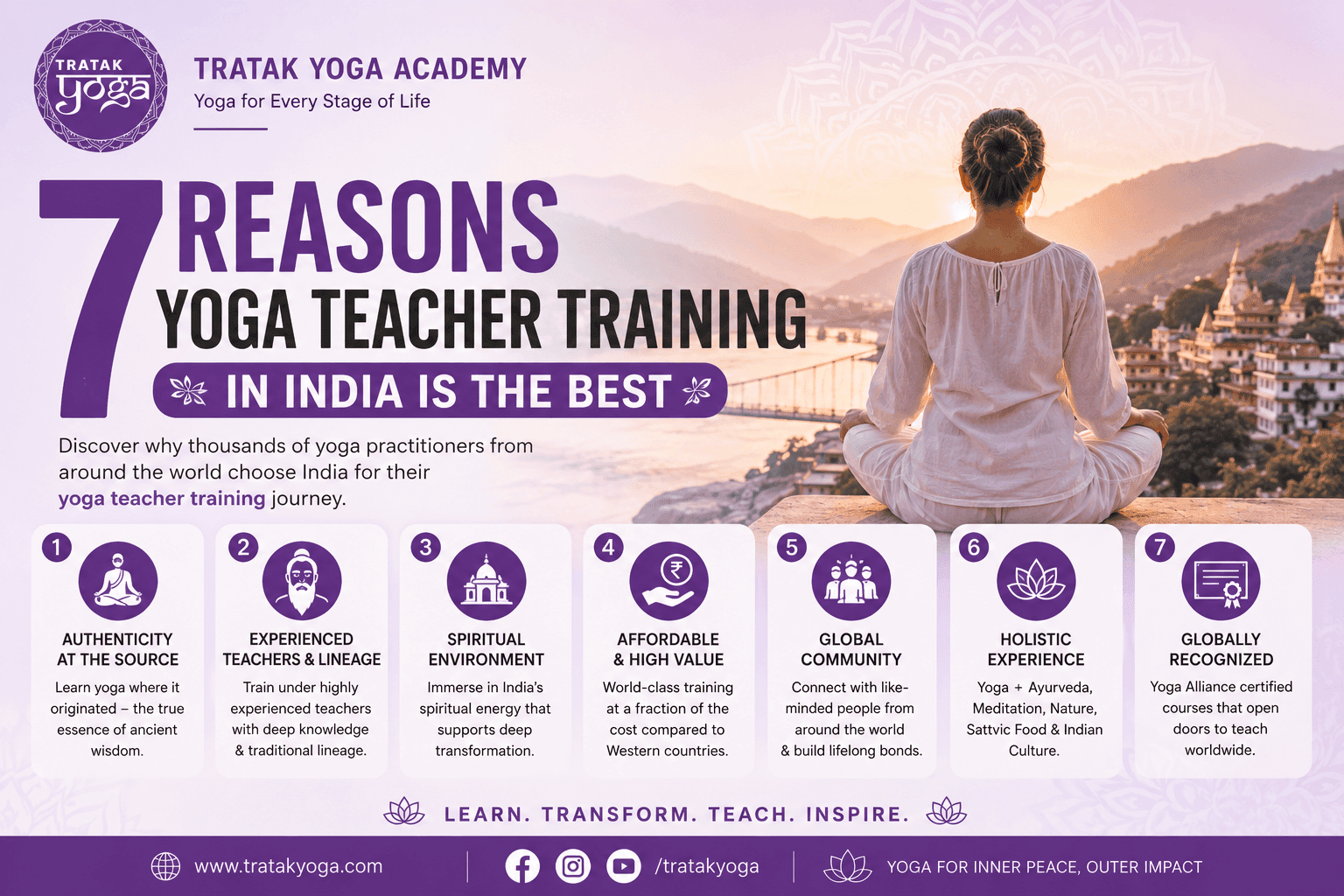
7 Reasons Why Yoga Teacher Training in India Is the Best
A grounded, honest look at why the birthplace of yoga remains the gold standard for teacher training — and what actually makes the experience different from a certification course closer to home.
Key Takeaways
- Yoga teacher training in India offers direct access to the lineages, teachers, and textual traditions that yoga actually originates from — something no amount of secondhand study elsewhere can fully replicate.
- Beyond authenticity, India offers a rare combination of immersive daily practice, significantly lower cost, experienced traditional faculty, and a living cultural context that shapes how the philosophy is understood, not just recited.
- Locations like Rishikesh, often called the “Yoga Capital of the World,” offer an ecosystem — ashrams, the Ganges, the Himalayan foothills, a global community of practitioners — that’s genuinely difficult to construct anywhere else.
- Training in India isn’t only about the certificate; it’s about the transformation that comes from stepping outside your normal environment and living the practice, not just studying it in a classroom for a few hours a week.
- Choosing the right school still matters enormously — Yoga Alliance accreditation, faculty credentials, and program depth should guide your decision as much as location does.
Introduction: Why Serious Practitioners Still Choose India
In a world where yoga teacher training certificates are now offered in nearly every major city on earth — often on weekends, sometimes fully online — a fair question is worth asking: why do so many serious practitioners still pack a bag and fly to India to become certified?
The honest answer isn’t nostalgia, and it isn’t marketing. It’s that certain things about learning yoga are genuinely different when you learn them at the source — from teachers raised inside the tradition, in a cultural context where the philosophy isn’t an import, surrounded by a level of immersion that a two-hour evening class simply cannot replicate.
This isn’t to say every yoga teacher training in India is automatically excellent, or that training elsewhere can’t be legitimate — plenty of well-run, deeply respectful programs exist outside India too. But there are specific, structural reasons why India continues to be considered, by a wide margin, the most sought-after destination for yoga teacher training worldwide. This article breaks down seven of them in depth — honestly, and without overselling what a certificate alone can do for you.
At Tratak Yoga Academy, we’ve built our training model — with campuses in Rishikesh, Pokhara, and Bali, alongside a dedicated online school — around this exact belief: that where and how you train shapes what kind of teacher you become, not just what certificate ends up on your wall.
Reason 1: India Is Where Yoga Actually Comes From
A Living Tradition, Not a Historical Reference
Yoga’s roots trace back thousands of years through Vedic, Upanishadic, and later classical texts — the Yoga Sutras of Patanjali, the Hatha Yoga Pradipika, the Bhagavad Gita’s teachings on karma and dhyana. These aren’t dusty academic references in India; they remain part of a living, actively taught tradition, passed through unbroken teacher-student lineages (teacher-shishya parampara) that continue today.
Learning Philosophy in Context, Not in Isolation
Studying yoga philosophy in India means encountering it embedded in the culture that produced it — temple architecture, daily ritual, language, and worldview all reinforce concepts that can otherwise feel abstract when taught as an isolated “philosophy module” elsewhere. Understanding dharma, karma, or the koshas lands differently when you’re not just reading a translated paragraph, but living somewhere those ideas visibly shape daily life around you.
Direct Access to Sanskrit and Original Texts
Many Indian teacher training programs include direct study of Sanskrit terminology and, in more advanced programs, guided reading of primary texts in their original structure — rather than relying solely on secondhand interpretations and translations, which inevitably lose some nuance.
Reason 2: Unmatched Depth and Immersion
Living the Practice, Not Scheduling It
A typical Western YTT often runs as an evening or weekend commitment stretched across many months, fit around a full work schedule. A residential program in India, by contrast, asks you to restructure your entire daily rhythm around the practice — often including early-morning meditation, multiple daily asana sessions, philosophy lectures, and community meals, for several consecutive weeks.
This immersion isn’t just about hours logged. It’s about what happens to a practice when it’s no longer competing with the rest of your life for attention — many practitioners describe this as the single most transformative part of training in India, distinct from the certificate itself.
The Power of Removing Yourself From Your Normal Environment
Stepping away from your usual routine, responsibilities, and distractions creates space for a kind of internal work that’s genuinely difficult to access while still embedded in ordinary daily life. This is not a new idea within yoga — it echoes the traditional value placed on retreat and withdrawal (pratyahara) as a precursor to deeper practice.
A Realistic Daily Schedule Example
- 5:30–6:00 AM: Wake, herbal tea
- 6:00–7:30 AM: Pranayama and meditation
- 7:30–9:30 AM: Asana practice
- 9:30–10:30 AM: Breakfast
- 11:00–12:30 PM: Philosophy or anatomy lecture
- 1:00–2:00 PM: Lunch and rest
- 3:00–4:30 PM: Teaching methodology / practice teaching
- 5:00–6:30 PM: Second asana session
- 7:00 PM: Dinner
- Evening: Self-study, journaling, or optional satsang
Reason 3: Significantly Lower Cost Without Compromising Quality
The Real Cost Comparison
A comprehensive residential 200-hour YTT in India — including tuition, accommodation, and meals — is frequently priced at a fraction of the tuition-only cost of an equivalent program in the US, UK, Australia, or Western Europe, where accommodation and meals are rarely even included in the base price.
What’s Usually Included in an Indian YTT Package
- Tuition and course materials
- Shared or private accommodation for the full program duration
- Three vegetarian meals a day (often Ayurvedic or sattvic in style)
- Excursions (temple visits, waterfall hikes, cultural experiences)
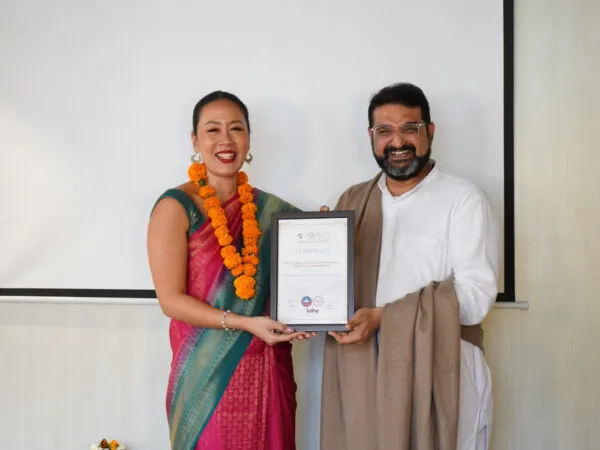
- In many cases, a graduation ceremony and certification processing
Why the Cost Difference Exists
Lower costs reflect genuine differences in regional cost of living and operating expenses — not, as some assume, a difference in teaching quality. In fact, many internationally trained senior teachers relocate to or regularly teach in India precisely because it allows schools to offer experienced faculty at accessible tuition rates, rather than the reverse.
Reason 4: Access to Experienced, Traditionally-Trained Faculty
Teachers Who Have Studied Under Their Own Mentors
Many senior teachers at Indian yoga schools have themselves trained for years, sometimes decades, under respected teachers within established lineages — offering students a direct, traceable connection to tradition rather than a certification obtained purely through a standardized course.
Specialized Faculty Across Disciplines
Reputable Indian schools frequently bring in dedicated specialists — a Sanskrit scholar for chanting and mantra, an Ayurvedic doctor for lifestyle and diet modules, a senior pranayama teacher, and a separate anatomy instructor — rather than having a single generalist teacher cover every subject area.
What to Look For in Faculty Credentials
- Years of personal practice and teaching experience (not just certification dates)
- Clear lineage or training background they can speak to directly
- A mix of specialized faculty across asana, philosophy, anatomy, and pranayama
- Willingness to answer direct questions about their own training background
Reason 5: A Genuine Cultural and Spiritual Context
Rishikesh: The Yoga Capital of the World
Few places on earth carry the concentrated yogic energy of Rishikesh — nestled in the Himalayan foothills along the Ganges, home to countless ashrams, the birthplace of the International Day of Yoga’s global recognition, and a town where the rhythm of daily life is visibly shaped by spiritual practice, from riverside aartis to temple bells marking the hours.
Beyond Rishikesh: Pokhara and Bali as Complementary Contexts
While Rishikesh remains the most iconic destination, other regional hubs — including Pokhara, Nepal, framed by the Annapurna range, and Bali’s spiritually rich, Hindu-influenced culture — offer their own powerful, distinct immersive contexts for training, each shaped by its own regional spiritual and natural landscape.
The Value of Sacred Geography
Traditional yogic thought has long placed significance on practicing in spiritually charged locations (tirthas) — places believed to be more conducive to inner transformation. Whether or not one holds this belief literally, there’s an undeniable psychological effect to practicing meditation at sunrise beside the Ganges rather than in a converted studio room — a felt difference many students describe as part of what made their training memorable in a way a certificate alone couldn’t capture.
Reason 6: Internationally Recognized Certification With Global Career Mobility
Yoga Alliance Accreditation
Most reputable Indian yoga schools offer Yoga Alliance USA-registered training, meaning the certification is internationally recognized and portable — allowing graduates to register as teachers and find work virtually anywhere in the world, not just within India.
A Truly International Student Community
Indian YTT programs typically draw students from dozens of countries into a single cohort — creating a genuinely global peer network of future studio owners, teachers, and practitioners that can translate into professional connections and opportunities long after the training ends, something a locally-drawn class elsewhere rarely offers in the same way.
Building a Portfolio Career
Many graduates go on to combine teaching with retreat leading, online course creation, or specialized workshops — and having trained in India, with its strong brand association with authenticity, can be a meaningful credibility marker when building an international teaching career, particularly for teachers marketing to Western audiences.
Reason 7: A Transformational Experience, Not Just a Transactional Course
The Difference Between Information and Transformation
You can learn the mechanics of Trikonasana or memorize the eight limbs of Patanjali’s Yoga Sutras from a book or a video course. What’s harder to replicate outside an immersive setting is the internal shift that tends to come from sustained, communal, disciplined practice — waking before sunrise for weeks in a row, sitting through discomfort in meditation, and being challenged by teachers who’ve walked the path further than you have.
Community as Part of the Curriculum
Living alongside a cohort of fellow trainees for several weeks — sharing meals, struggling through the same early mornings, supporting each other through practice teaching nerves — builds a kind of camaraderie that shapes how people carry the training forward into their own teaching, long after the program ends.
What Graduates Often Say Changes Most
Beyond technical teaching skill, many graduates describe their relationship to their own practice, their confidence speaking in front of a group, and their understanding of yoga as a complete lifestyle system (not just a physical practice) as the most lasting outcomes of training in an immersive Indian setting.
What to Look for When Choosing a Yoga School in India
Not every program delivers on these seven advantages equally. Use this checklist to evaluate a school before enrolling:
- Yoga Alliance registration (or equivalent recognized accreditation)
- Transparent faculty bios with real teaching and lineage background
- Clear curriculum breakdown — hours dedicated to asana, philosophy, anatomy, teaching methodology, and pranayama
- Verified reviews from past graduates, not just curated testimonials
- Realistic class sizes that allow for individual feedback and adjustment
- Clarity on what’s included — accommodation, meals, excursions — versus hidden extra costs
- Post-certification support — job placement assistance, alumni community, or continuing education pathways
Common Concerns About Training in India (Addressed Honestly)
“Is it safe, especially for solo travelers?”
Established yoga towns like Rishikesh host thousands of international students year-round and have well-developed infrastructure for foreign visitors, including many women traveling solo. As with any international travel, sensible precautions apply, and choosing a reputable school with proper accommodation support meaningfully reduces most common concerns.
“Will I be able to keep up if I’m a beginner?”
Most 200-hour programs are designed to accommodate a range of experience levels, with modifications offered throughout. That said, prospective students should be honest with a school about their current practice level before enrolling, and choose a program explicitly structured to support beginners if that describes them.
“What about food and health concerns?”
Reputable schools take this seriously, typically offering freshly prepared, hygienic vegetarian meals as part of the program, often with attention to dietary restrictions when communicated in advance. It’s still wise to ask directly about food preparation standards and water safety before booking.
Frequently Asked Questions
Why is India considered the best place for yoga teacher training?
India offers direct access to yoga’s original lineages and texts, immersive daily practice schedules, significantly lower program costs, experienced traditionally-trained faculty, and a cultural context that shapes understanding of yoga philosophy in ways difficult to replicate elsewhere.
How much does yoga teacher training in India typically cost?
Costs vary by school, program length, and accommodation type, but residential programs in India are generally significantly more affordable than equivalent training in Western countries, especially considering that accommodation and meals are typically included in the India-based price.
Is a yoga teacher training certificate from India recognized internationally?
Yes, provided the school is registered with Yoga Alliance or an equivalent internationally recognized accrediting body. This allows graduates to register as certified teachers and seek work in most countries worldwide.
How long is a typical yoga teacher training program in India?
The most common format is the 200-hour foundational YTT, typically completed over 3 to 4 weeks in a residential setting, though 300-hour advanced trainings and shorter specialized courses are also widely available.
Do I need prior yoga experience to join a YTT in India?
Most foundational 200-hour programs welcome practitioners with a range of experience, including relative beginners, though a consistent personal practice of at least several months beforehand is generally recommended to get the most out of the training.
Which city in India is best for yoga teacher training?
Rishikesh is the most internationally recognized destination, often called the “Yoga Capital of the World,” though other regions and neighboring countries — including Pokhara, Nepal — also offer highly respected training environments with their own distinct character.
Is online yoga teacher training as good as training in India?
Online training offers valuable flexibility and can deliver strong theoretical and even practical instruction, but it cannot fully replicate the immersive daily practice, direct in-person adjustment, and cultural context that residential training in India provides. Many practitioners choose online training as a starting point or a scheduling necessity, while others deliberately choose the residential format specifically for that immersive difference.
A Note From Tratak Yoga Academy
There’s a reason the pilgrimage to India for yoga training has continued, largely unbroken, for decades even as the practice has spread to every corner of the globe: something about learning at the source changes the experience in ways that are hard to fully articulate until you’ve lived it. As a Yoga Alliance USA-accredited school with campuses in Rishikesh, Pokhara, and Bali, we’ve watched this transformation happen in cohort after cohort — not because a certificate from India is inherently more valid than one earned elsewhere, but because the immersion, the lineage, and the living cultural context genuinely shape the kind of teacher you become.
This article reflects general information about yoga teacher training in India. Program details, inclusions, and costs vary by school — prospective students should always verify specifics directly with any program they’re considering.




Comments are closed