Choosing a yoga teacher training program is not an easy task because it will definitely have an influence on your understanding of yoga and confidence while teaching yoga. It is more than just choosing a destination; it is about making the right decision to take your career forward.
India provides various opportunities as far as YTT programs are concerned, ranging from conventional residential YTT programs provided by schools based in India, for example, Rishikesh, to more particular ones that include online programs. There are so many programs that it is becoming increasingly hard to compare them. Program cost, location, certification, curriculum, instructors, and accommodation are the key criteria involved in choosing a program, but they cannot be taken individually. Let us get started!
What Is a Yoga Teacher Training Course and Why Does It Matter?
A Yoga Teacher Training Course is a structured program that helps students deepen their understanding of yoga and develop the skills needed to teach others.
Practising yoga and teaching yoga are different. A good training program teaches you how to:
- Explain asanas clearly and safely
- Understand basic anatomy and physiology
- Modify practices for different students
- Plan and sequence yoga classes
- Teach pranayama, meditation, and relaxation
- Develop effective communication skills
- Understand yoga philosophy and ethics
The quality of training matters because becoming a yoga teacher requires more than completing a certificate. A well-structured course combines practical training, theoretical knowledge, teaching skills, and an understanding of yoga’s traditional foundations.
7 Key Factors to Consider When Choosing Yoga Teacher Training in India
The appropriate Yoga Teacher Training course must fit your objectives, expectations from training, experience and practical requirements rather than simply location and cost.
1. Yoga Style and Tradition
Start by asking yourself what kind of yoga you actually want to study. Yoga teacher training programs can differ considerably in their approach, with some focusing strongly on Hatha, Ashtanga, Vinyasa, Yin, different types of meditation, or a combination of traditions.
If you already practice a particular style, a course with deeper training in that tradition may make sense. If you are still exploring, a broader curriculum can introduce you to different approaches before you decide where to specialize.
Also look beyond the name of the style. Check how much time the course gives to asana practice, pranayama, meditation, philosophy, and teaching methodology. The aim is to choose a tradition and teaching approach that you genuinely want to understand and eventually share with others.
2. Curriculum and Teaching Methodology
A course title alone cannot tell you how comprehensive the training will be. Before enrolling, read the syllabus carefully and check whether it covers both practical yoga and the knowledge required to teach safely and effectively.
A well-structured curriculum may include:
- Asana practice and alignment
- Pranayama and meditation
- Yoga philosophy
- Anatomy and physiology
- Teaching methodology
- Sequencing and class planning
- Practice teaching and feedback
- Adjustments and communication
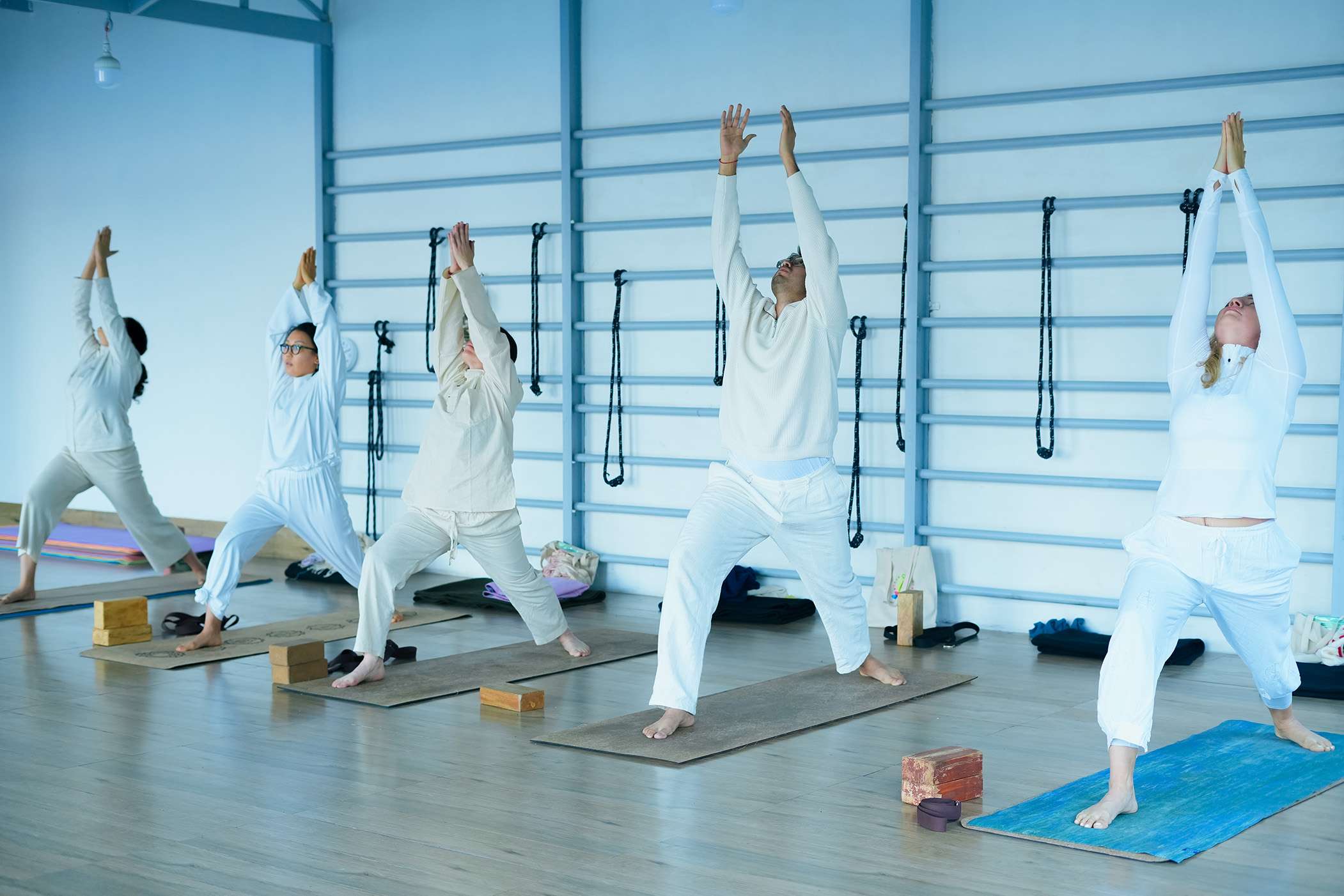
For example, Tratak Yoga’s published curriculum includes asana, pranayama, meditation, philosophy, anatomy, teaching skills, Ayurveda, and yoga business.
Most importantly, find out how much actual teaching practice you will receive. Learning how to perform a posture is different from learning how to explain, demonstrate, observe, and guide it for a class.
3. Teacher Credentials and Yoga Lineage
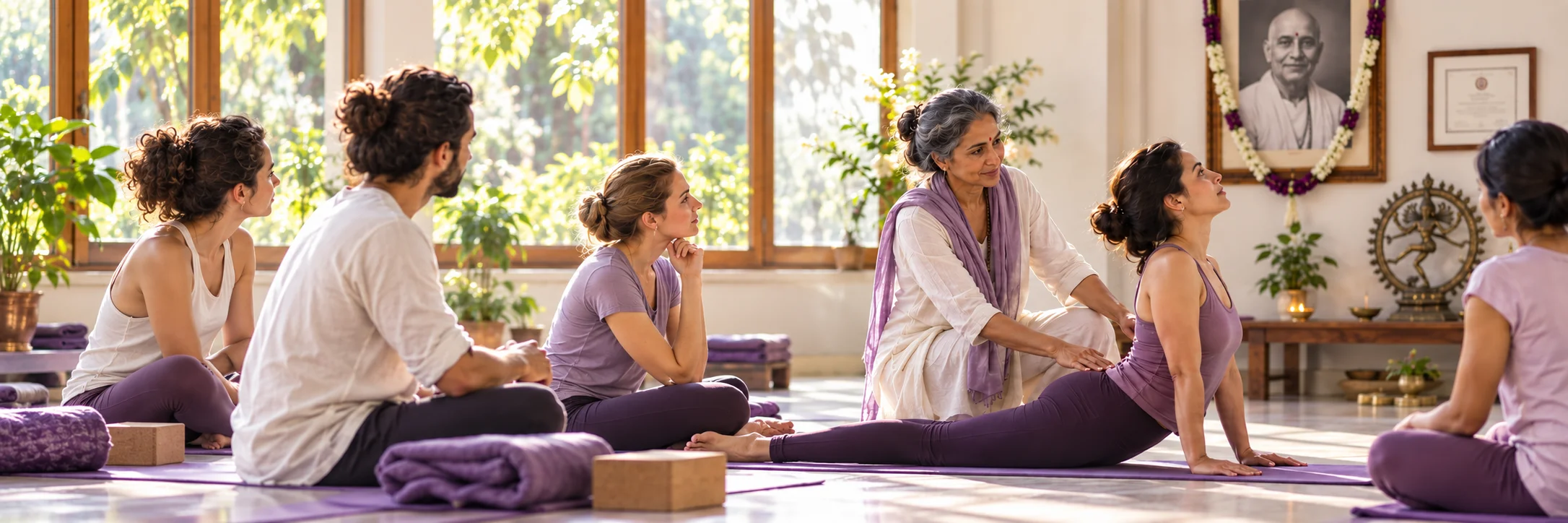
The teachers can have as much impact on your learning experience as the syllabus itself. Before choosing a school, take some time to research who will actually teach the course rather than relying only on the school’s overall reputation.
Look at their qualifications, teaching experience, areas of specialization, and connection to the yoga tradition they teach. If the school follows a particular lineage, understand what that means and how it influences the training.
It can also help to watch a teacher’s classes, interviews, or demonstrations when available. You want instructors who can explain concepts clearly, demonstrate appropriately, give useful corrections, and create an environment where students can ask questions. A strong teacher-training experience is not simply about collecting information; it is about learning how to apply that knowledge in practice.
4. Accreditation and Certification
Certification is an important consideration, especially if you intend to teach yoga professionally after completing your training. However, yoga certification actually matters when you plan to teach professionally, so do not assume that every certificate has the same meaning or professional value.
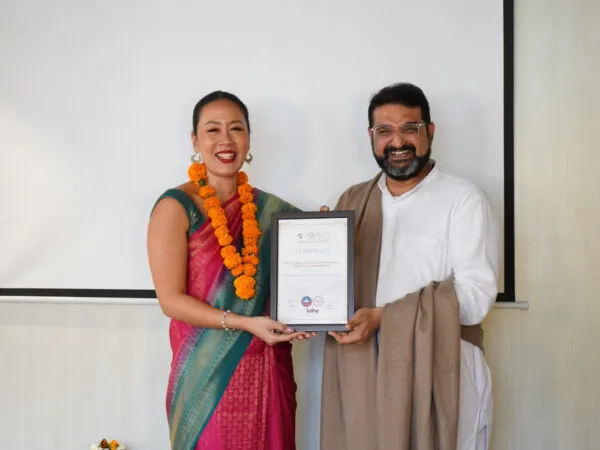
First, check exactly which organization or school issues the certificate and what the stated credential represents. If a program claims Yoga Alliance registration, verify the school’s current status and understand what completing the program allows you to do within the Yoga Alliance system. For example, Tratak Yoga states that its programs offer Yoga Alliance-recognized RYT 200 and RYT 300 certification pathways, including 200 hour yoga teacher training and 300 hour yoga teacher training options.
Also check whether the course is designed for your intended purpose. A certificate for personal development may have different implications from a professional teacher-training credential. If teaching internationally is your goal, research the requirements of the studios, organizations, or countries where you eventually plan to work.
5. Location and Learning Environment
The place of learning is an essential factor that affects your training experience considerably. India has a variety of yoga schools, such as Rishikesh, Goa, Dharamshala, Mysore, and others located in various places with varying climate, lifestyle, and types of yoga.
Consider an environment where you will be able to focus. A stay at a residential school will provide you with an intensive routine, whereas the city school will give you easier accessibility to transport, restaurants, health care, etc.
If you are thinking of attending a yoga school in Rishikesh, then also find out about its immediate environment and not just choose it due to its popularity in terms of yoga. Find out all the information on accommodation, food, teaching facilities, the proximity of amenities, internet, transport and schedule.
6. Batch Size and Student-to-Teacher Ratio
One factor that people often miss out on while choosing between courses is batch size. In yoga teaching courses, there is practical training, demonstration, correction, and teaching, and thus individual attention can become quite significant.
Inquire about the batch size and number of teachers who will teach your course from the institution. In case the batch size is smaller, you may have more chances of receiving one-on-one feedbacks; otherwise, you will have plenty of chances to interact with varied personalities.
The bottom line is not to hunt only for the smallest batch size. Rather, you need to think about the number of teachers available for interaction. For instance, at Tratak Yoga, it is mentioned that they limit their batches to only 10–15 students.
7. Total Cost, Accommodation, and Course Inclusions
Do not compare Yoga Teacher Training courses based only on the advertised tuition fee. Two programs with different prices may include very different things, so always calculate the overall cost of attending.
Before making a decision, check whether the quoted fee includes:
- Course tuition and study materials
- Accommodation
- Daily meals
- Airport or local transfers
- Excursions or activities
- Certification fees
- Additional workshops
- Any registration or examination charges
Also ask about expenses that are not included. Flights, visas, personal transportation, insurance, laundry, additional food, and personal purchases can increase your actual budget.
A transparent fee structure makes comparison much easier. Ask the school for a complete list of inclusions and exclusions before paying a deposit or booking your place. In short, compare the total experience and total cost, not just the headline course price.
Common Mistakes to Avoid While Choosing a Yoga Teacher Training in India
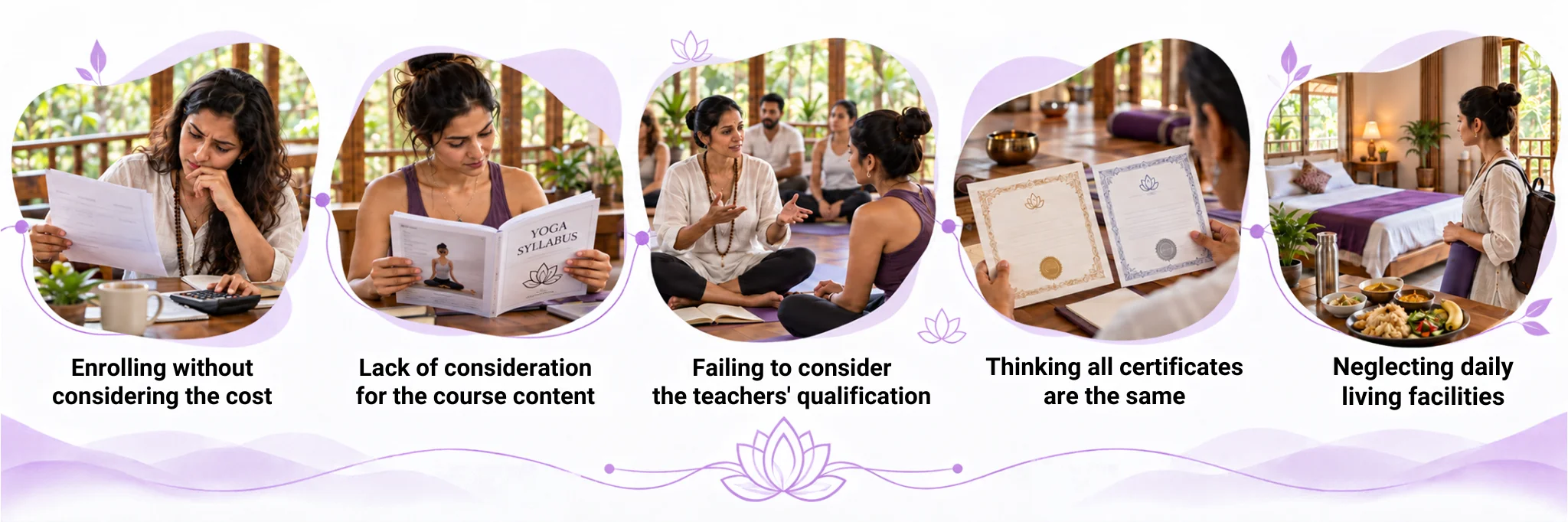
Just some research prior to enrolling will enable you to avoid costly surprises and select a course that truly suits your expectations.
- Enrolling without considering the cost: A less expensive course might not cover your expected accommodation, food, materials, or other services.
- Lack of consideration for the course content: It is never wise to enroll yourself in a program without understanding its syllabus and its practical teaching methods.
- Failing to consider the teachers’ qualification: The quality of education largely depends on the qualification, communication skills, and teaching style of the teachers.
- Thinking all certificates are the same: It is important to learn who provides this certificate, what does it mean, and does it suit your career needs?
- Neglecting daily living facilities: Accommodation, food, schedule, venue, and facilities will greatly influence your residential training program.
It will be better to make comparisons of the programs before finalizing any decision.
Conclusion
Finding a suitable yoga teacher training program in India is basically about choosing the program that suits your purpose rather than picking out the best known place or the most economical choice available. First, you need to decide on the yoga school and type of training you seek, and then you can compare the programs based on their syllabus, tutors, certification, batch size, location, and overall cost.
You should study the information related to the course and ask for clarifications regarding any matter that needs further inquiry before you join the course. It would be better if you consider the aspects included in the package, what certification you will get, and whether the learning atmosphere suits you.