
Yoga Nidra: The Ultimate Technique of Self-Exploration and Restoration
A complete, practical guide to yogic sleep — what it is, how it works, and why lying still for 30 minutes can feel more restorative than hours of ordinary rest.
Key Takeaways
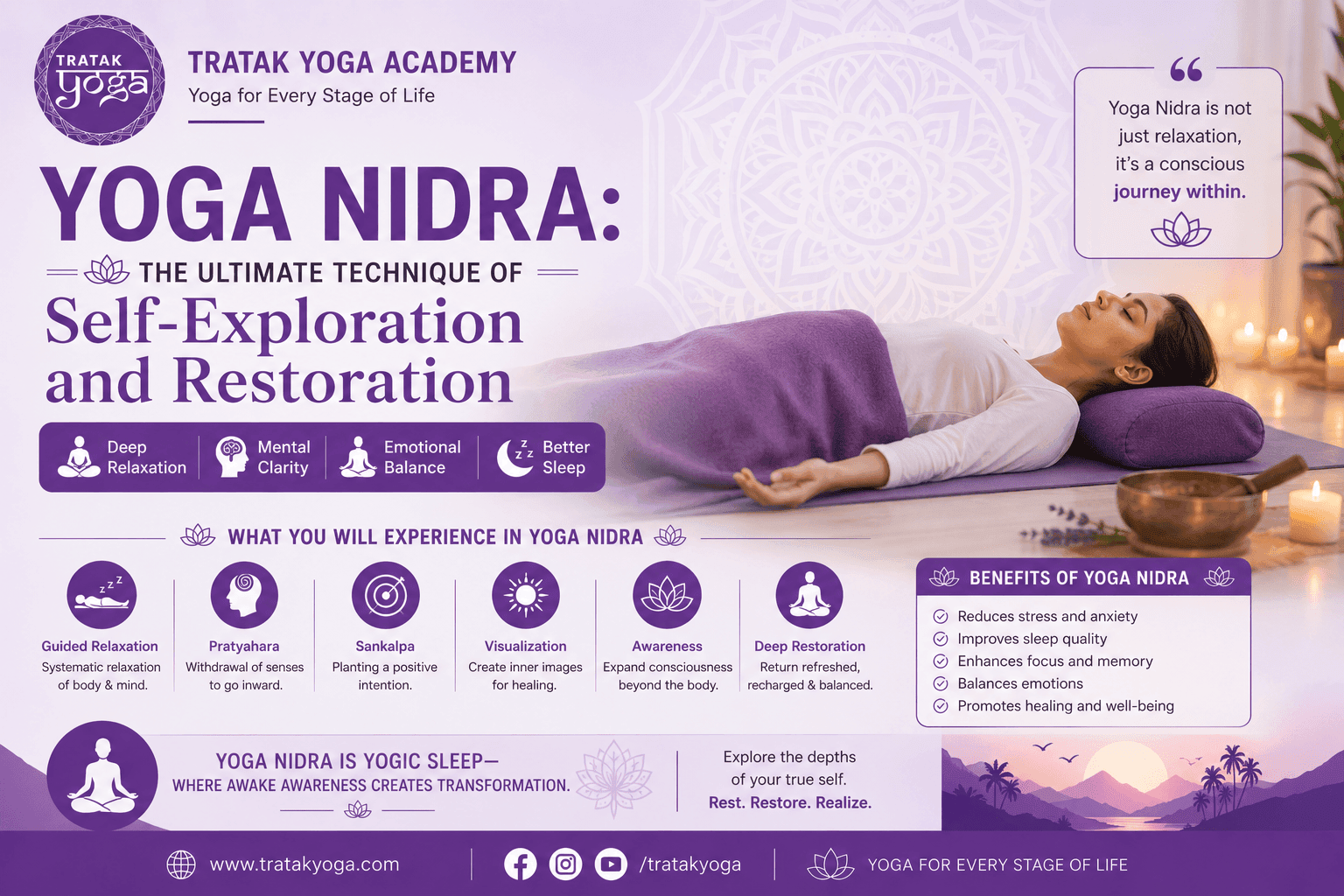
- Yoga Nidra, often called “yogic sleep,” is a guided meditation practiced lying down, designed to bring the body into deep rest while the mind stays quietly aware.
- Unlike ordinary sleep, Yoga Nidra keeps a thread of consciousness alive even as the body relaxes completely. This in-between state is where much of its power comes from.
- The practice follows a specific structure: intention setting, body awareness, breath awareness, sensation, visualization, and a gentle return to waking life.
- Regular practice is linked to better sleep, lower stress, and a calmer nervous system, though it should not replace medical care for diagnosed sleep or mental health conditions.
- You don’t need any experience to start. You just need a quiet space, 20 to 45 minutes, and a willingness to lie still and listen.
Introduction: The Art of Doing Absolutely Nothing
Modern life rewards constant output. Even rest gets scheduled, optimized, and squeezed between tasks. So when someone hears that Yoga Nidra involves lying down and doing “nothing” for 30 to 45 minutes, it’s easy to assume it’s just a nap with a nicer name.
It isn’t. Yoga Nidra is one of the most precisely structured practices in the entire yogic tradition. It asks you to stay quietly awake while your body drops into a state of rest deeper than most people ever reach, even after eight hours of ordinary sleep.
This guide explains exactly what Yoga Nidra is, where it comes from, how it works, and how to actually practice it — whether you’re a curious beginner, a yoga teacher considering a specialization, or someone simply looking for real, lasting rest.
At Tratak Yoga Academy, Yoga Nidra holds a serious place in our teaching, not as a “bonus relaxation session” tacked onto the end of a class, but as a discipline in its own right, taught across our Rishikesh, Pokhara, and Bali campuses and through our online programs.
What Is Yoga Nidra, Exactly?
A Simple Definition
Yoga Nidra is a guided meditation practiced lying down, usually in Savasana (corpse pose), that leads the practitioner through a structured sequence of body awareness, breath awareness, and visualization. The goal is to reach a state of deep relaxation while remaining consciously aware, rather than falling fully asleep.
Where the Name Comes From
The word “nidra” means “sleep” in Sanskrit. But Yoga Nidra isn’t sleep in the usual sense. It’s often described as the state between waking and sleeping, sometimes called the hypnagogic state. Your body rests as if asleep. Your mind stays just aware enough to follow the practice.
Not the Same as a Guided Body Scan
Some people confuse Yoga Nidra with a simple guided relaxation or body scan. They share similarities, but Yoga Nidra follows a specific, traditional structure with distinct stages, which sets it apart from a general relaxation recording.
Where Yoga Nidra Comes From
Ancient Roots in Tantra
Yoga Nidra draws on ancient tantric practices that explored consciousness, awareness, and the layers of the self. These ideas are old, appearing in various forms across yogic and tantric texts for centuries.
How It Became a Modern, Teachable Practice
The structured, modern form of Yoga Nidra most people practice today was largely developed by Swami Satyananda Saraswati of the Bihar School of Yoga in the mid-20th century. He organized older tantric relaxation techniques into a clear, repeatable sequence that could be taught systematically, rather than passed down only through direct, informal instruction.
Why This History Matters
Knowing where a practice comes from matters, especially for teachers. Yoga Nidra isn’t a modern wellness trend dressed up in Sanskrit. It’s a genuinely old practice, refined into a teachable format that still respects its original depth.
How Yoga Nidra Works: The Stages of Practice
A full Yoga Nidra session moves through several distinct stages. Understanding them helps explain why the practice feels so different from simply lying down and relaxing on your own.
Stage 1: Settling In and Setting an Intention (Sankalpa)
The practice begins with settling into a comfortable, supported position. Then comes the Sankalpa — a short, positive, personal intention or resolve, stated silently to yourself. This isn’t a to-do list item. It’s a deeper, values-based intention, repeated at both the start and end of the practice.
Stage 2: Body Awareness (Rotation of Consciousness)
Next comes a systematic journey of attention through the body. The guide names body parts, often dozens of them, in a specific sequence, and your only job is to bring brief attention to each one without moving.
This stage is deceptively powerful. It draws attention fully into the body, which naturally quiets the wandering, planning mind that usually resists stillness.
Stage 3: Breath Awareness
Attention then shifts to the breath. You might be guided to simply notice natural breathing, or to count breaths, gently deepening the sense of internal stillness built in the previous stage.
Stage 4: Awareness of Sensations and Opposites
This stage often introduces pairs of opposite sensations, like heaviness and lightness, or warmth and coolness. Traditional teaching holds that working with these opposite pairs helps release deeper, stored tension, though the practice also works simply as a way to deepen present-moment awareness.
Stage 5: Visualization
Many practices include a visualization sequence, sometimes symbolic, sometimes narrative. This can involve imagining specific images, places, or short story-like sequences, depending on the tradition and the teacher.
Stage 6: Returning to Sankalpa and Waking Up
The session closes by silently repeating the original intention one more time, followed by a slow, gentle return to full waking awareness. This closing stage matters. Rushing it can undo some of the calm the practice just built.
What Makes Yoga Nidra Different From Other Meditation Styles
Posture: Lying Down vs. Sitting Upright
Most meditation styles, like mindfulness or mantra meditation, are practiced sitting upright. Yoga Nidra is practiced lying down, which removes the physical effort of holding a seated posture and allows for a much deeper level of physical release.
Guided, Not Self-Directed
Yoga Nidra is almost always guided, either by a live teacher or a recording. Unlike silent meditation styles that ask you to sit with your own thoughts, Yoga Nidra gives your mind something specific to follow the entire time.
The Hypnagogic State
This is the real distinguishing feature. Yoga Nidra deliberately works with the threshold between waking and sleeping. This state is believed, in traditional teaching, to allow access past ordinary conscious resistance, making it especially effective for deep relaxation and, in some traditions, self-inquiry.
A Quick Comparison
Feature | Yoga Nidra | Seated Meditation |
|---|---|---|
Posture | Lying down | Seated upright |
Guidance | Almost always guided | Often self-directed |
Physical effort | Minimal | Requires postural effort |
State targeted | Hypnagogic (waking-sleeping border) | Focused waking awareness |
Typical length | 20–45 minutes | 10–30 minutes |
The Benefits of Yoga Nidra
Deep Physical Rest
Yoga Nidra is widely used to support deep physical relaxation. Because it requires no physical effort to sustain, it’s accessible even to people who feel too exhausted for a seated meditation practice.
Better Sleep Quality
Many practitioners turn to Yoga Nidra specifically to improve sleep. The practice trains the nervous system to shift out of a stressed, alert state, which can make it easier to fall asleep and stay asleep afterward.
Lower Stress and a Calmer Nervous System
Regular practice is associated with a calmer overall stress response. The slow, guided structure helps shift the body out of “fight or flight” mode and into a more restful, parasympathetic state.
Support for Anxiety, Alongside Professional Care
Some practitioners find Yoga Nidra genuinely helpful for managing everyday anxiety. It should never replace professional mental health support for diagnosed anxiety disorders, but many people use it as a complementary practice alongside therapy or other treatment.
A Tool for Self-Exploration
Beyond relaxation, Yoga Nidra has traditionally been used as a tool for deeper self-inquiry. The quiet, receptive state it creates is considered, in yogic tradition, a useful space for reflecting on the Sankalpa, or intention, set at the start of the practice.
Who Should Practice Yoga Nidra?
People With Trouble Sleeping
Because of its direct link to nervous system regulation, Yoga Nidra is often recommended for people struggling with sleep, whether that’s difficulty falling asleep or restless, low-quality sleep.
People Recovering From Burnout or Chronic Stress
The practice asks nothing physically demanding of you, which makes it especially suitable for people recovering from burnout, overtraining, or prolonged stress, when a vigorous physical practice might feel like too much.
Yoga Teachers Looking to Specialize
Yoga Nidra is a strong specialization for teachers interested in restorative, trauma-informed, or therapeutic teaching spaces. Its scripted structure also makes it one of the more approachable meditation styles to develop strong facilitation skills in, relatively early in a teaching career.
Is It Safe for Everyone?
Yoga Nidra is generally considered safe and gentle for most people. That said, deep relaxation practices can occasionally surface unexpected emotions, so anyone working through significant trauma should ideally practice with guidance from a trained teacher, at least at first.
How to Practice Yoga Nidra: A Beginner’s Guide
What You Need
- A quiet space, free from interruptions
- A yoga mat, rug, or bed
- A blanket, since body temperature often drops during deep relaxation
- A pillow or bolster under the knees for lower back support
- 20 to 45 minutes of uninterrupted time
Step-by-Step for Your First Practice
- Lie down in Savasana. Arms relaxed at your sides, palms facing up, legs slightly apart.
- Set your Sankalpa. Choose a short, positive intention, and repeat it silently to yourself two or three times.
- Follow a guided recording or teacher. Especially as a beginner, don’t try to self-guide your first several sessions.
- Stay awake, if you can. Falling asleep occasionally is normal and not a failure, but staying gently aware throughout is part of what makes the practice distinct.
- Repeat your Sankalpa again at the end. Then take your time transitioning back to sitting up.
How Often Should You Practice?
Many practitioners start with two to three sessions a week and build from there. Even a single weekly session, done consistently, tends to produce noticeable benefits over a few months.
Common Mistakes Beginners Make
- Trying to force stillness. Yoga Nidra works with gentle attention, not effortful control. Straining against restlessness usually backfires.
- Practicing in a space that’s too warm or too cold. Body temperature naturally drops during the practice, so a comfortable, adjustable temperature matters more than people expect.
- Skipping the Sankalpa. It’s tempting to rush past this step, but the intention-setting stage is part of what makes Yoga Nidra different from ordinary relaxation.
- Jumping up too quickly at the end. A rushed transition back to activity can undo some of the calming effect the practice just built.
- Expecting to stay awake perfectly every time. Especially for beginners, drifting into light sleep sometimes happens. It doesn’t mean you’re doing it wrong.
Yoga Nidra Teacher Training: Is It Right for You?
If you’re a yoga teacher, or training to become one, Yoga Nidra offers a genuinely valuable specialization. It appeals to a wide range of students, including people who find seated meditation difficult, and it fits naturally into restorative, therapeutic, and stress-focused class offerings.
A good Yoga Nidra teacher training should cover the traditional stage structure in depth, the physiology of relaxation and the nervous system, script-writing and voice-guiding skills, and clear guidance on scope of practice, especially around emotional material that can surface during deep relaxation work.
Frequently Asked Questions
What is Yoga Nidra in simple terms?
Yoga Nidra is a guided meditation practiced lying down that leads you through body awareness, breath awareness, and visualization to reach a state of deep rest while staying gently conscious, rather than falling fully asleep.
Is Yoga Nidra the same as meditation?
Yoga Nidra is a specific type of guided meditation, but it differs from most seated meditation styles in posture, structure, and the specific hypnagogic state it targets, which sits between waking and sleeping.
How long should a Yoga Nidra session last?
Sessions typically range from 20 to 45 minutes. Beginners often start with shorter, guided sessions around 20 minutes and extend the length as they become more comfortable with the practice.
Can Yoga Nidra help with insomnia?
Many people use Yoga Nidra to support better sleep, since it helps calm the nervous system and shift the body out of a stressed, alert state. It should be treated as a complementary practice rather than a replacement for medical evaluation of chronic insomnia.
Is it normal to fall asleep during Yoga Nidra?
Yes, especially for beginners. While staying gently aware is part of the traditional practice, falling asleep occasionally doesn’t cancel out the benefits and is a common experience, particularly for people who are especially sleep-deprived.
What is a Sankalpa in Yoga Nidra?
A Sankalpa is a short, positive, personal intention or resolve, set silently at the beginning of a Yoga Nidra practice and repeated again at the end. It’s considered a core part of the traditional structure, not an optional add-on.
Do I need to be flexible or experienced to practice Yoga Nidra?
No. Yoga Nidra requires no physical flexibility or prior meditation experience. You simply need to lie down comfortably and follow the guided instructions, which makes it one of the more accessible practices for complete beginners.
A Note From Tratak Yoga Academy
In a culture that treats rest as something you earn only after everything else is done, Yoga Nidra offers a quiet kind of rebellion: permission to lie down, do nothing, and call it practice. As a Yoga Alliance USA-accredited school with campuses in Rishikesh, Pokhara, and Bali, and a dedicated online program, we teach Yoga Nidra as the serious, structured discipline it actually is, not a five-minute add-on at the end of class. If your body has been asking for real rest for a while now, this might be where you start listening.
This article reflects general information about Yoga Nidra and its traditional practice. It is not medical or psychological advice, and it should not replace professional care for diagnosed sleep, anxiety, or mental health conditions.




Comments are closed