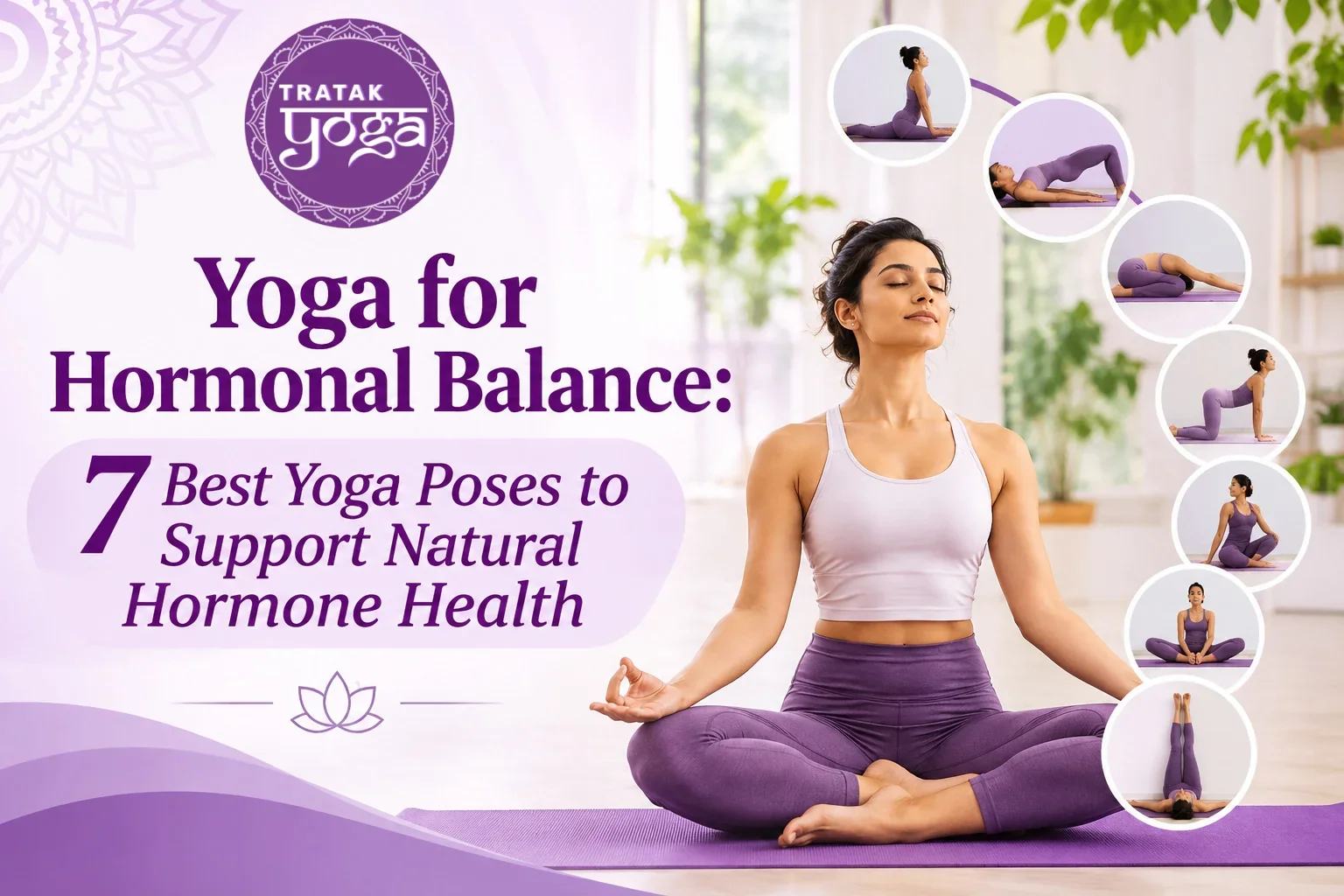
The time of your period comes later than expected; you get insomnia and feel stressed throughout the day. This cycle goes on again and again. There is always a temptation to think that it all happens because of the hormones, but there could be other reasons. Does yoga help in such situations?
Yoga can help with relaxation, activity and sleep, all of which are crucial for one’s overall health. But it is impossible to expect that any one posture will regulate your thyroid, treat PCOS or ensure hormonal balance. It is better to act another way – to practice gentle postures every day, to pay attention to your body and consult a doctor.
Which Yoga Asanas Are Best for Hormonal Balance?
Child, Cat-Cow, Bridge, Cobra, Butterfly, Legs-up-the-wall, and Savasana are all great poses to include in this gentle yoga routine. Mobility, muscle engagement, breath control, and relaxation can be found in these poses. While studies support the benefits of yoga on stress and sleep, there is no evidence that these poses regulate specific hormones.
Each pose includes steps, suggested times and precautions. Move slowly, breathe naturally and stop if something hurts.
1. Child’s Pose (Balasana) for Relaxation
Child’s Pose offers a quiet moment between more active movements. You fold forward, support your body and let your breathing settle. It may help you notice physical tension.
How to practise
- Kneel on a mat and bring your big toes towards each other.
- Separate your knees slightly if that gives your stomach more room.
- Move your hips towards your heels and fold forward gently.
- Rest your forehead on the mat or a cushion.
- Reach your arms forwards or leave them beside your legs.
Stay for 30 to 60 seconds while breathing comfortably. Support your hips with a blanket or choose seated rest if your knees hurt.
Why include it? This pose encourages a slower pace and may help with perceived stress. It cannot be relied upon to lower cortisol or treat so-called adrenal fatigue. Its value is a comfortable pause.
2. Cat-Cow Pose (Marjaryasana-Bitilasana) for Gentle Movement
Cat-Cow combines gentle spinal movement with steady breathing. It also prepares you for active poses.
How to practise
- Begin on your hands and knees, with wrists beneath shoulders.
- Breathe in as you gently lift your chest and allow your back to arch.
- Breathe out as you round your spine and lower your head slightly.
- Continue moving between the two positions without forcing either one.
Complete eight to ten slow rounds, taking about one or two minutes. Support your knees with a towel or try a seated version if your wrists hurt.
Why include it? Cat-Cow supports spinal mobility, breathing awareness and a gentle warm-up. Claims that it stimulates endocrine glands lack good evidence.
3. Bridge Pose (Setu Bandhasana) for Hip and Core Strength
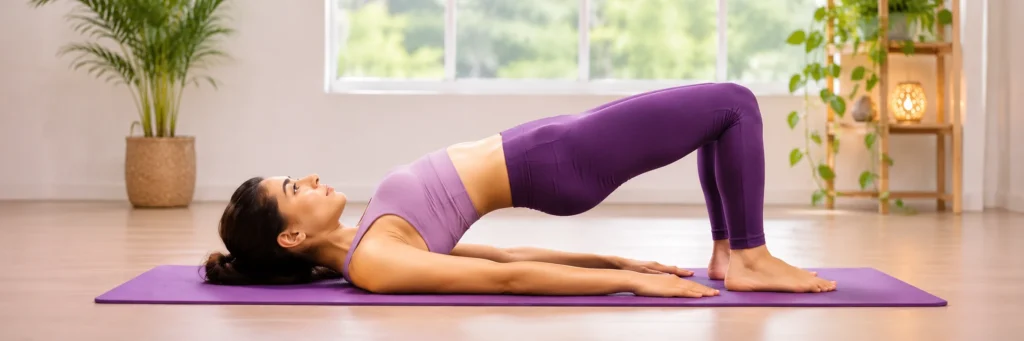
Bridge Pose adds a little strength work to this otherwise gentle sequence. It works the hips and trunk without demanding deep movement.
How to practise
- Lie on your back with your knees bent and feet flat.
- Keep your feet roughly hip-width apart and your arms beside you.
- Press through both feet and slowly raise your hips.
- Pause briefly, then lower your back to the floor with control.
Hold each lift for 10 to 20 seconds and repeat two or three times. Keep breathing and avoid turning your neck while raised.
Why include it? Bridge Pose strengthens supporting muscles and helps maintain hip mobility. Claims that it stimulates the thyroid are unproven. Modify it for neck or back pain.
4. Cobra Pose (Bhujangasana) for Posture
Cobra Pose introduces a gentle backbend and encourages you to move away from a rounded sitting posture. A small, controlled lift is better than a forced backbend.
How to practise
- Lie on your stomach with your legs comfortably extended.
- Place your palms near your shoulders and keep your elbows close.
- Inhale as you gently lift your chest using your back muscles.
- Keep your shoulders relaxed and your gaze slightly forwards.
- Exhale as you lower yourself to the mat.
Try two or three repetitions, holding each for around 10 seconds. Avoid forcing the lift. Seek modifications during pregnancy (proper prenatal yoga guidance can help) or with back pain or recent abdominal surgery.
Why include it? Cobra can support mobility and body awareness. It has no proven effect on adrenal hormones or menstrual regulation.
5. Butterfly Pose (Baddha Konasana) for Hip Comfort
Butterfly Pose is often included in yoga for female hormone balance because it is a gentle way to move and stretch around the hips. Supported knees make it more comfortable.
How to practise
- Sit upright with your legs extended in front of you.
- Bend both knees and bring the soles of your feet together.
- Hold your feet or ankles without rounding your back excessively.
- Let your knees relax outwards, using cushions under them if needed.
- Breathe naturally and keep your shoulders soft.
Stay for 30 to 60 seconds. Sit on a blanket if needed. Never force your knees down.
Why include it? The pose stretches the inner thighs and supports hip mobility. It cannot be assumed to stimulate ovaries or treat PCOS.
6. Legs-Up-the-Wall Pose (Viparita Karani) for Rest
This restful position encourages stillness and gentle breathing after a busy day.
How to practise
- Sit beside a clear wall with one hip near it.
- Lower yourself onto your side and roll onto your back.
- Bring your legs up the wall, adjusting your distance for comfort.
- Rest your arms beside you and allow your breathing to slow.
- Roll onto your side before sitting up again.
Rest for three to five minutes if the position feels comfortable. Bend your knees if needed. Stop if dizzy or uncomfortable and seek advice for eye conditions affected by inversion.
Why include it? The main benefit is relaxation. Claims about resetting reproductive or thyroid hormones are unproven.
7. Corpse Pose (Savasana) for Deep Relaxation
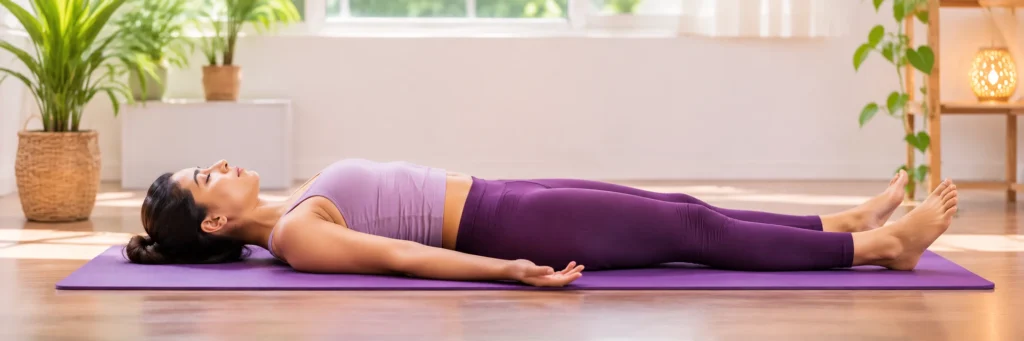
Savasana closes the session without asking your body to do more. Your task is simply to rest and notice your breathing.
How to practise
- Lie comfortably on your back with your legs relaxed.
- Place your arms beside you, palms facing whichever way feels natural.
- Close your eyes if you wish and soften your jaw and shoulders.
- Breathe normally instead of trying to control every breath.
- When ready, roll onto your side and sit up slowly.
Stay for three to five minutes. Put a pillow beneath your knees if your lower back needs support. Side-lying rest is another option.
Why include it? Savasana provides a calm ending and may help you practise relaxation consistently. It does not guarantee lower cortisol.
How Can Yoga Support Natural Hormone Health?
Hormones influence sleep, metabolism, menstrual cycles and stress responses. Yet tiredness alone does not prove a hormone imbalance.
Stress management is one area where yoga may help. Research suggests that regular yoga practice can reduce perceived stress in some groups. Cortisol findings vary between studies.
Sleep quality is another useful consideration. Gentle movement and relaxation before bed may help some people unwind. Keep a consistent bedtime too, and consider a simple Ayurveda-inspired evening routine to help you wind down.
Physical activity also matters. Yoga can provide movement on days when intense exercise is unappealing. It cannot replace prescribed treatment.
How to Create a 15-Minute Yoga Routine for Hormonal Balance
These timings include repetitions and rests, not continuous holds of active poses.
Yoga Pose | Time |
|---|---|
Cat-Cow | 2 minutes |
Cobra | 1 minute |
Butterfly | 2 minutes |
Bridge | 2 minutes |
Child’s Pose | 2 minutes |
Legs-Up-the-Wall | 3 minutes |
Savasana | 3 minutes |
Total | 15 minutes |
Start with three or four sessions a week if that feels manageable. Practise when convenient and replace uncomfortable poses.
Track comfort and consistency, not immediate hormonal changes.
Is Yoga for Female Hormone Balance Helpful for PCOS, PMS and Menopause?
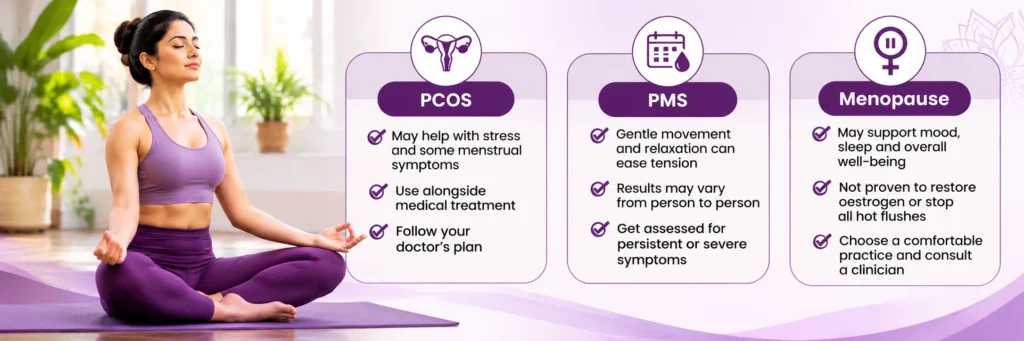
Yoga can form part of a broader care plan for some women’s health concerns, but the evidence is not the same for every condition.
For PCOS, small studies suggest possible improvements in stress and certain metabolic or menstrual outcomes. However, reviews have found limitations in study quality. Yoga should complement, not replace, the treatment recommended by a healthcare professional. The Office on Women’s Health explains that PCOS has no cure, but symptoms can be managed with a plan made with your doctor.
For PMS, gentle movement and relaxation may help some people manage tension or discomfort. Results differ and persistent or severe symptoms deserve assessment.
During menopause, yoga may support mood, sleep and general well-being. Evidence does not establish that it reliably restores oestrogen or treats every hot flush. Choose a comfortable practice and discuss troublesome symptoms with a clinician.
Who Should Take Precautions Before Practising These Yoga Poses?
Modify your practice if you are pregnant, recovering from surgery or living with significant joint, back or neck problems. Stop any movement that brings sharp pain, dizziness or unusual discomfort. A qualified instructor with a strong grasp of alignment and anatomy can help adapt poses to your mobility and experience.
Seek medical assessment for missed periods, unusual bleeding or unexplained fatigue. Continue prescribed care for PCOS or thyroid conditions.