

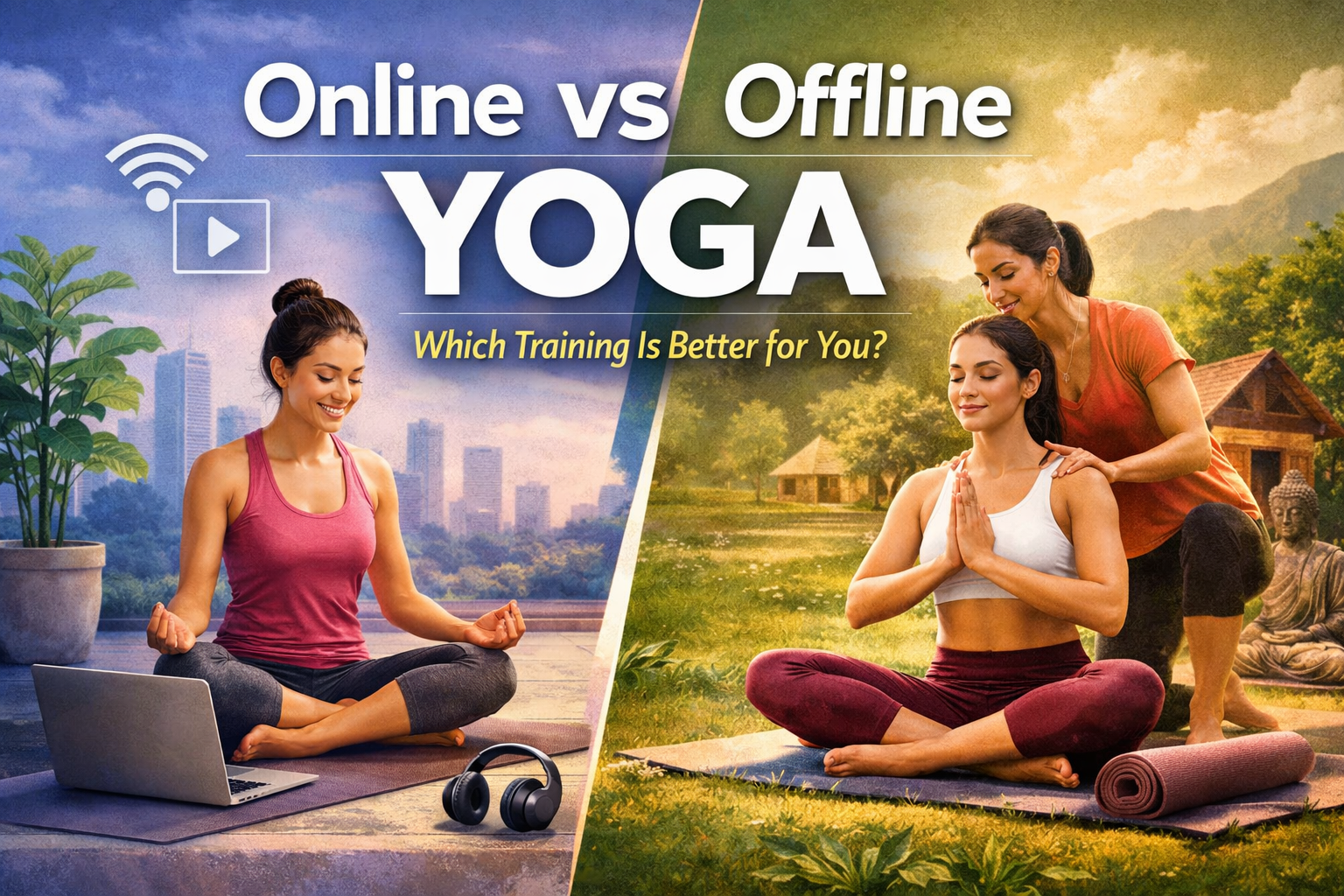
Choosing the right yoga teacher training (YTT) format can feel overwhelming, especially when both online and offline options promise great results. If you’re planning to deepen your practice or become a certified yoga teacher, one big question naturally comes up: online vs offline yoga teacher training — which is better?
The answer isn’t the same for everyone. The right option depends on your schedule, goals, and learning style. In this guide, we’ll break down everything you need to know so you can confidently choose the best path for your yoga journey.
What Is Yoga Teacher Training (YTT)?
Yoga Teacher Training is a structured program designed to help you:
- Deepen your yoga practice
- Learn yoga philosophy and anatomy
- Understand teaching techniques
- Get certified to teach yoga professionally
Whether you choose an online or offline format, the core purpose remains the same, transformation through yoga.
Online Yoga Teacher Training: Pros & Cons
Online yoga teacher training has become increasingly popular, especially for those who prefer flexibility and learning from home.
Advantages of Online Yoga Teacher Training
- Flexibility and Convenience
You can study yoga on your own schedule from any location, making it a great option for busy professionals and students. - Cost-Effective
Online yoga certification tends to be more budget-friendly as it eliminates expenses like travel and stay. - Comfort of Home
Practicing in a familiar environment can feel safe and comfortable, especially for beginners.
Disadvantages of Online Yoga Teacher Training
- Limited Hands-On Guidance
You may miss real-time corrections and physical adjustments from experienced teachers. - Less Immersive Experience
Online learning lacks the deep connection and environment of a yoga school. - Self-Discipline Required
Without a structured routine, it’s easy to lose consistency.
Offline Yoga Teacher Training: Pros & Cons
Offline or in-person yoga teacher training is often considered the traditional and most immersive way to learn yoga.
Benefits of Offline Yoga Teacher Training
- Hands-On Learning Experience
You receive real-time feedback, posture corrections, and direct interaction with teachers. - Immersive Yoga Environment
Staying in a yoga school environment allows you to step away from daily distractions and fully focus on your practice. - Strong Community Connection
You build meaningful connections with fellow students and teachers. - Deeper Transformation
The structured routine and environment often lead to a more profound personal and spiritual experience.
Disadvantages of Offline Yoga Teacher Training
- Higher Cost
Includes travel, accommodation, and course fees. - Fixed Schedule
You’ll need to stick to a pre-defined timetable and course duration. - Travel Required
Not always convenient for everyone.
Online vs Offline Yoga Teacher Training: Key Differences
| Factor | Online Yoga TTC | Offline Yoga TTC |
| Flexibility | High | Limited |
| Cost | Lower | Higher |
| Learning Experience | Self-paced | Structured & guided |
| Interaction | Limited | Direct & personal |
| Environment | Home-based | Immersive |
| Practical Training | Less | More |
Which Yoga Teacher Training Is Better for You?
Choose Online Yoga Teacher Training if:
- You need flexibility in your schedule
- You’re on a budget
- You like to learn at a pace that suits you.
- You cannot travel
Choose Offline Yoga Teacher Training if:
- You want a deep, immersive experience
- You value hands-on guidance
- You’re serious about becoming a professional yoga teacher
- You want to fully transform your lifestyle
Final Verdict: Online vs Offline Yoga TTC
Both formats have their advantages, but if your goal is true transformation, confidence in teaching, and deep understanding of yoga, offline yoga teacher training often provides a more complete experience.
That said, online yoga training is a great starting point for beginners or those with limitations.
The best choice depends on your personal goals — not just convenience.
Why Many Students Prefer Offline Yoga Training
In-person yoga teacher training offers something that online courses cannot fully replicate:
- Real-time learning
- Authentic yogic environment
- Spiritual growth
- Personal transformation
This is why many students eventually move from online learning to offline training for a deeper experience.
FAQs
1. Is online yoga teacher training valid?
Yes, many online yoga certification courses are valid, but always check accreditation before enrolling.
2. Which is better — online vs offline yoga teacher training?
Offline training is generally better for hands-on learning and deep transformation, while online is better for flexibility.
3. Can I become a yoga teacher through online training?
Yes, but practical teaching confidence is often stronger with in-person training.
4. Is offline yoga teacher training worth it?
Absolutely. It provides a complete experience, including physical, mental, and spiritual growth.
5. What is the main difference between online and offline yoga TTC?
The real gap is in how much guidance, engagement, and practical exposure you receive.
6. Who should choose online yoga training?
People with time constraints, budget limitations, or travel restrictions.
7. Who should choose offline yoga training?
Those who want a deeper, more authentic yoga journey and professional teaching skills.
Grow Your Yoga Journey with Tratak Yoga
If you’re ready to go beyond basic learning and truly transform your practice, choosing the right environment matters.
At Tratak Yoga, you’ll experience authentic, immersive yoga teacher training guided by experienced teachers in a peaceful and spiritual setting. No matter if you’re starting fresh or advancing your skills, the right support can truly impact your journey.
Explore your path and take the next step toward becoming a confident yoga teacher.
